
CNC milling services represent the backbone of modern precision manufacturing. From aerospace components to medical implants, CNC milling delivers the accuracy, repeatability, and surface quality that demanding industries require. This guide provides an overview of what CNC milling services entail, the capabilities they offer, and how to select the right partner for your manufacturing needs.
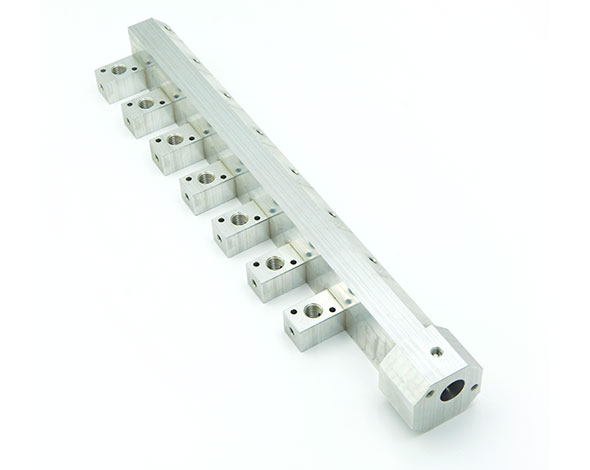
CNC milling is a subtractive manufacturing process that uses computer-controlled rotary cutters to remove material from a solid workpiece. The process can create complex three-dimensional shapes with tight tolerances that would be impossible or uneconomical to produce by manual methods. Modern CNC milling machines operate on up to five axes simultaneously, allowing them to machine compound curves, undercuts, and complex cavity features in a single setup. The range of materials compatible with CNC milling includes everything from common aluminum alloys to superalloys, engineering plastics, and advanced composites.
Professional milling services offer capabilities that extend far beyond simple part production. Service providers typically offer design for manufacturability (DFM) feedback, material selection guidance, tolerance analysis, and surface finish optimization. Many also provide secondary operations such as deburring, heat treatment, plating, anodizing, and assembly. This comprehensive approach reduces the burden on the customer’s engineering team and accelerates the path from design to production-ready parts.
The following video provides an overview of CNC milling operations and capabilities in a modern production facility.
One of the key advantages of professional milling services is access to advanced machine tool technology. Five-axis machining centers with simultaneous contouring capability reduce setup times and improve accuracy by allowing complex parts to be machined in a single fixturing. High-speed spindles (15,000-30,000 RPM) combined with advanced CAM programming enable aggressive material removal rates while maintaining excellent surface finishes. Probing systems and in-process measurement ensure that critical dimensions stay within tolerance throughout the production run without requiring offline inspection.
Quality assurance in CNC milling services follows established standards. ISO 9001 certification is the minimum expectation, with many providers holding AS9100 for aerospace, ISO 13485 for medical devices, and ITAR registration for defense applications. First article inspection reports document conformance to all specified dimensions, typically with inspection data traceable to NIST standards. Process capability indices (Cpk) of 1.33 or higher are expected for critical features in production runs.
Lead times for CNC milling services vary widely depending on part complexity, material availability, and current shop capacity. Simple two-axis parts in common materials can often ship within 5-10 business days. Complex five-axis parts requiring custom fixturing and programming may require 3-6 weeks. Many service providers now offer expedited options for prototype and emergency production needs, though these carry cost premiums of 30-100% over standard lead times.
Cost factors in CNC milling include setup time, programming effort, material cost, machine time, and post-processing operations. Parts with tight tolerances (±0.0005 inches or tighter) cost significantly more than parts with standard tolerances (±0.005 inches) because they require slower feeds, more finishing passes, and additional inspection. Complex geometries requiring five-axis machining or custom fixturing also command higher rates due to extended programming and setup time. Material costs depend on market prices and can fluctuate significantly for specialty alloys and engineering plastics.
Selecting a CNC milling service provider requires careful evaluation of several factors. Machine tool inventory determines the size and complexity limits of parts that can be produced. Material certifications ensure traceability and compliance with industry standards. Quality management system certifications demonstrate commitment to consistent quality. Communication responsiveness and engineering support capability determine how smoothly the design-to-production transition will proceed. The recommended approach is to request quotes from three to five qualified providers and evaluate them on technical capability, quality systems, lead time, and total cost rather than unit price alone.
Modern CNC milling services continue to evolve with advances in automation, digital manufacturing, and Industry 4.0 technologies. Automated pallet systems allow lights-out machining operations that run 24/7 with minimal human intervention. Digital twin simulations verify toolpaths and detect collisions before metal is ever cut. Real-time process monitoring detects tool wear and alerts operators before quality deviations occur. These technologies are making professional milling services more capable, more consistent, and more cost-effective than ever before.