
Introduction: When Time and Tolerance Decide Profit
Margins today are won by minutes and microns. A laser machine is often the fastest lever you can pull. On busy floors, setup and rework can eat 18–25% of cycle time, while burr cleanup and heat-affected zone (HAZ) errors quietly stack labor costs. An industrial laser cutting machine shortens that loop with consistent kerf and clean edges, and it plugs into a modern CNC controller without a long learning curve (that’s the surprise). But why do many shops still lean on punches, saws, or waterjet when tolerances keep tightening and quoting windows keep shrinking? Let’s break down what actually drags ROI—and how to read the signals that your process is ready to change.

Where Traditional Cutting Falls Short
Are the hidden costs adding up?
Conventional tools carry costs that do not show on the invoice. Tool wear drives unplanned stops. Changeovers inflate indirect labor. Thermal distortion forces secondary ops. These are not edge cases; they are routine. With mechanical cutting, kerf variation creeps as tools dull. With waterjet, pump maintenance and garnet disposal shift the cost curve. And with older CO₂ units, optics drift and assist gas consumption is high—funny how that works, right? A fiber-based path tightens the motion control loop and stabilizes cut quality, especially on thin gauge steel or aluminum. Look, it’s simpler than you think: fewer consumables, fewer handoffs, and a steady path that servo drives and a well-tuned gantry can repeat day after day.
The hidden part is planning waste. Poor nesting raises scrap. Long warm-up and test passes add downtime. If your nesting algorithm can’t respect kerf width or nozzle standoff, you lose material before you even press start. Burr removal becomes the shadow shift. Meanwhile, operators juggle assist gas settings and offsets that a smarter controller should manage. Add in quality drifts from worn guides, and you see why first-pass yield suffers. These are structural flaws, not operator errors. They are why shops carry more WIP and miss ship dates. A tighter system reduces those leaks at the source, not with more inspection, but with more stable inputs and predictable outputs.
Principles Behind the Next Wave
What’s Next
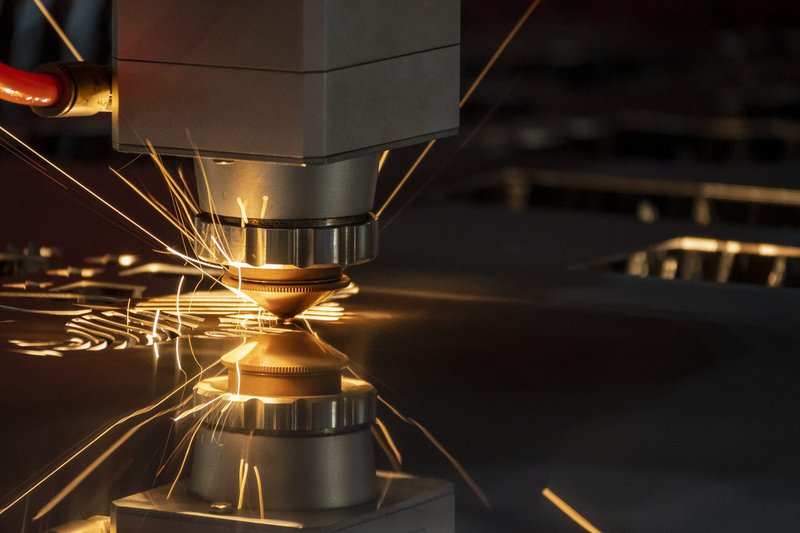
The new playbook is technical and calm. Modern fiber sources pair beam-shaping optics with fast motion feedback. Real-time sensors watch spark intensity and adjust speed on the fly—closed-loop control that holds edge quality and reduces HAZ. Power converters stabilize delivery, so you get clean starts and fewer micro-dross events. Edge computing nodes at the machine analyze vibrations and drift, flagging issues before your parts do. Integrations matter: the CNC controller talks to the nesting engine, so sheet utilization improves and cycle estimates match reality. A galvanometer head for fine features, or a hybrid gantry for long cuts, gives you the right toolpath without hacking the program— and yes, it matters.
Think beyond the cut. Predictive maintenance models the life of lenses and nozzles based on duty cycle and assist gas flow. Thermal maps guide pierce timing to avoid hotspots. The next-gen industrial laser cutting machine folds these principles into the workflow so operators can run more orders with less guesswork. Material sensors verify thickness; the controller auto-tunes for kerf compensation; and motion planning smooths corners to protect finish. This is not theory. Shops that adopt these controls cut rework hours, stabilize takt time, and quote tighter windows. The result: fewer fire drills, more predictable margins, and a process you can scale without adding late-night heroics.
How to Evaluate Your Next Move
Before you sign, test what matters and measure it the same way every time. Use these three metrics to compare options and avoid cost surprises: 1) Cut Quality Stability: Track edge roughness, taper, and burr height across a full shift, not a single demo part. Include small radii and mixed alloys; record HAZ width and kerf precision after multiple starts. 2) True Operating Cost: Roll in assist gas use, consumables, lens/nozzle life, energy per part, and mean time between service. Include planned downtime and any edge computing diagnostics that reduce it. 3) Workflow Fit: Validate nesting output, CNC/controller features, and how well the machine shares data with your MES or ERP. Confirm the motion control loop keeps tolerance when speed increases. If a candidate wins on all three, your ramp risk drops, and so does the learning curve. For deeper engineering context and process benchmarks, see LEAD.